
Does My Small Business Website Need to Be Accessible?
Yes — accessibility widens your customer base, lowers legal risk, and improves SEO. Most fixes are simple: alt text, contrast, labels, and keyboard navigation.

Evolvv Strategies
Operator notes
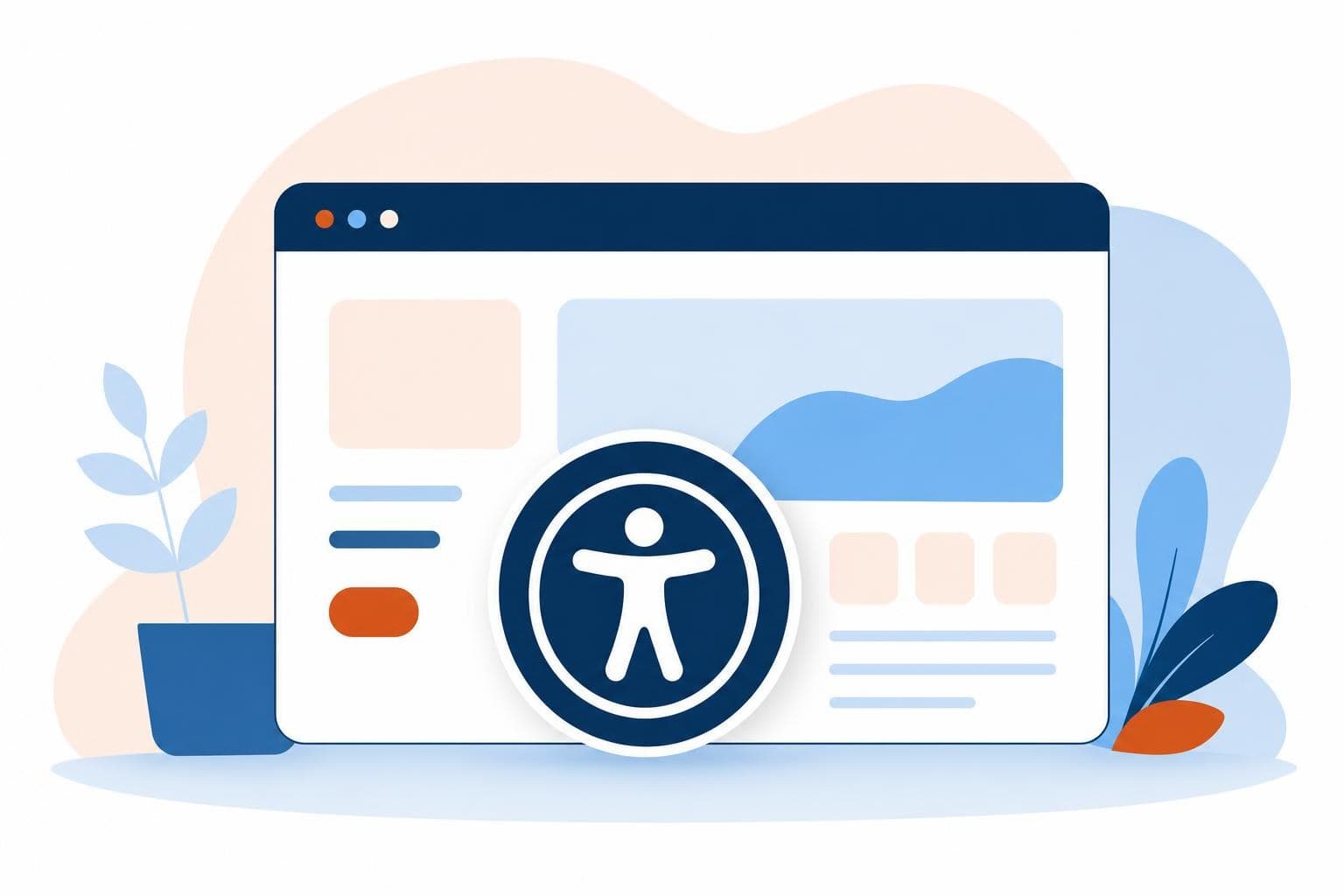
Yes, your small business website should be accessible. Roughly one in four adults has a disability, so accessibility widens your customer base, reduces real legal risk, and improves SEO since the same fixes help search engines too. Most of the work is simple: alt text, good contrast, labeled forms, and keyboard navigation.
Owners hear "accessibility" and picture an expensive compliance project for big corporations. That's a misunderstanding that costs them customers.
Accessibility isn't charity or red tape. It's making sure everyone who wants to buy from you actually can — and it turns out the same changes that help disabled visitors help everyone, including Google.
Why this is a business issue, not a legal one
Let's start with the number that matters: a large share of adults have a disability affecting vision, hearing, movement, or cognition. If your site is hard for them to use, you're quietly turning away a meaningful slice of your market — people who were ready to buy.
There's a legal angle too. Accessibility lawsuits against small businesses have climbed for years, and "we're just a small shop" is not a defense that holds up. But the lawsuit risk is the floor, not the reason.
Accessibility isn't a tax on your website. It's a discount on excluding customers you'd happily have served.
The real reason is simpler: an accessible site is a better site for everyone. Captions help people in noisy rooms. Good contrast helps anyone in bright sunlight. Clear navigation helps the distracted and the rushed. You're not building a special version for a few — you're building a better version for all.
The fixes that cover most of it
The reassuring news: you don't need a rebuild. A handful of changes handle the vast majority of accessibility issues.
- Add alt text to images. Describe each meaningful image so screen readers — and Google — understand it.
- Fix your color contrast. Make sure text stands out clearly from its background. Light grey on white fails everyone.
- Label your form fields. Every input needs a clear, programmatic label so assistive tech knows what it's for.
- Make it keyboard-navigable. Everything clickable should work with the Tab key, not just a mouse.
- Add captions to video. Caption anything with speech so deaf and hard-of-hearing visitors — and silent scrollers — can follow.
Notice the bonus: alt text, captions, and clean structure are also exactly what search engines read. Doing accessibility well quietly improves your SEO at the same time. One effort, two payoffs.
The SEO bonus nobody mentions
This is the part that changes the math for skeptical owners. Accessibility and SEO are largely the same work wearing different hats.
Search engines are, in effect, the most demanding screen-reader users on earth. They can't see your images, so they rely on alt text. They can't watch your videos, so they read your captions and transcripts. They navigate by structure, just like assistive tech does. When I ran my last company, the round of changes we made for accessibility — proper headings, alt text, labeled links — also lifted our search rankings, because we'd finally made the site legible to machines as well as people.
So if the customer and legal arguments don't move you, the SEO one should. You're improving accessibility and findability with a single set of fixes. Building it in from the start is part of our services — far cheaper than retrofitting later.
Quick wins you can try this week
- Add descriptive alt text to every meaningful image on your site.
- Run your pages through a free contrast checker and fix any low-contrast text.
- Try navigating your whole site using only the Tab key, and fix anything you can't reach.
- Make sure every form field has a clear, visible label.
- Add captions to any video that includes speech.
FAQ
Are small businesses legally required to have accessible websites?
In many regions, accessibility laws apply to businesses of all sizes, and lawsuits against small companies have risen for years. Being small is not a reliable defense. Beyond the legal risk, accessibility is simply good business — it keeps you from turning away ready customers.
How much does it cost to make a website accessible?
Far less than owners expect. Most issues are fixed with alt text, better contrast, labeled forms, and keyboard navigation — changes you or your developer can make without a rebuild. Building accessibly from the start costs almost nothing extra; retrofitting later costs more.
Does accessibility really help SEO?
Yes. Search engines rely on the same signals assistive technology does — alt text, captions, clean headings, and structure. Improving accessibility makes your site more legible to both screen readers and search crawlers, so one set of fixes improves accessibility and rankings together.
What's the most important accessibility fix to start with?
Alt text on images and good color contrast usually deliver the biggest improvement for the least effort, and they help both disabled visitors and SEO. After that, labeled forms and keyboard navigation cover most remaining issues for a typical small business site.
Want to know how accessible — and findable — your site really is? A free Growth Audit reviews the technical basics that affect both your customers and your search rankings.