Module 3 · Fix the Follow-Up
Where leads & customers leak
Most “I need more leads” problems are actually follow-up problems wearing a disguise. You don’t have a traffic problem. You have a bucket with holes in it, and you keep trying to pour in more water. This lesson finds the holes.
The direct answer
Leads and customers leak in five predictable places: slow first response, one-and-done follow-up, no system for “not now” leads, a sloppy handoff after the sale, and never asking for the next thing (review, referral, repeat). Plug those five and you’ll often grow revenue without adding a single new lead. It’s the cheapest growth there is.
The leak that costs the most: speed
Here’s the finding that should bother you. The classic lead-response studies — the original Lead Response Management analysis and Harvard Business Review’s audit of 2,241 companies — put the penalty for waiting an hour at somewhere between 7× and 10× fewer leads you’ll ever even reach or qualify. Treat the exact multiple as folklore; the retellings range from 7× to 21× depending on what they measured. Treat the direction as law: the first useful response usually wins the deal — not the “best” business, the fastest one.
Most owners lose here not because they don’t care, but because they’re on a job, on a ladder, with a client. The inquiry sits for three hours. By then the customer has messaged two competitors and booked whoever answered first. You did everything right except the one thing that mattered: be first.
The pull quote worth taping to your monitor
Most “lead-gen problems” are actually follow-up problems wearing a disguise.
The five leaks, one at a time
Slow first response
Anything over ~5 minutes for a hot inbound and you’re bleeding deals to whoever answered first. (Fixed in the next lesson.)
One touch, then quit
Sales research keeps landing between five and eight touches to close. Most owners send one email and call the lead “dead.” It wasn’t dead — it was busy.
No home for “not now”
A “maybe in spring” lead with nowhere to live is a lost lead. You need one simple re-engagement path so it doesn’t vanish.
The post-sale void
The moment after “yes” is when buyers feel most anxious and most likely to ghost or charge back. A clear onboarding touch steadies them.
Never asking for more
The review, the referral, the repeat — your highest-margin growth, and most owners never ask because it feels awkward. We’ll script it.
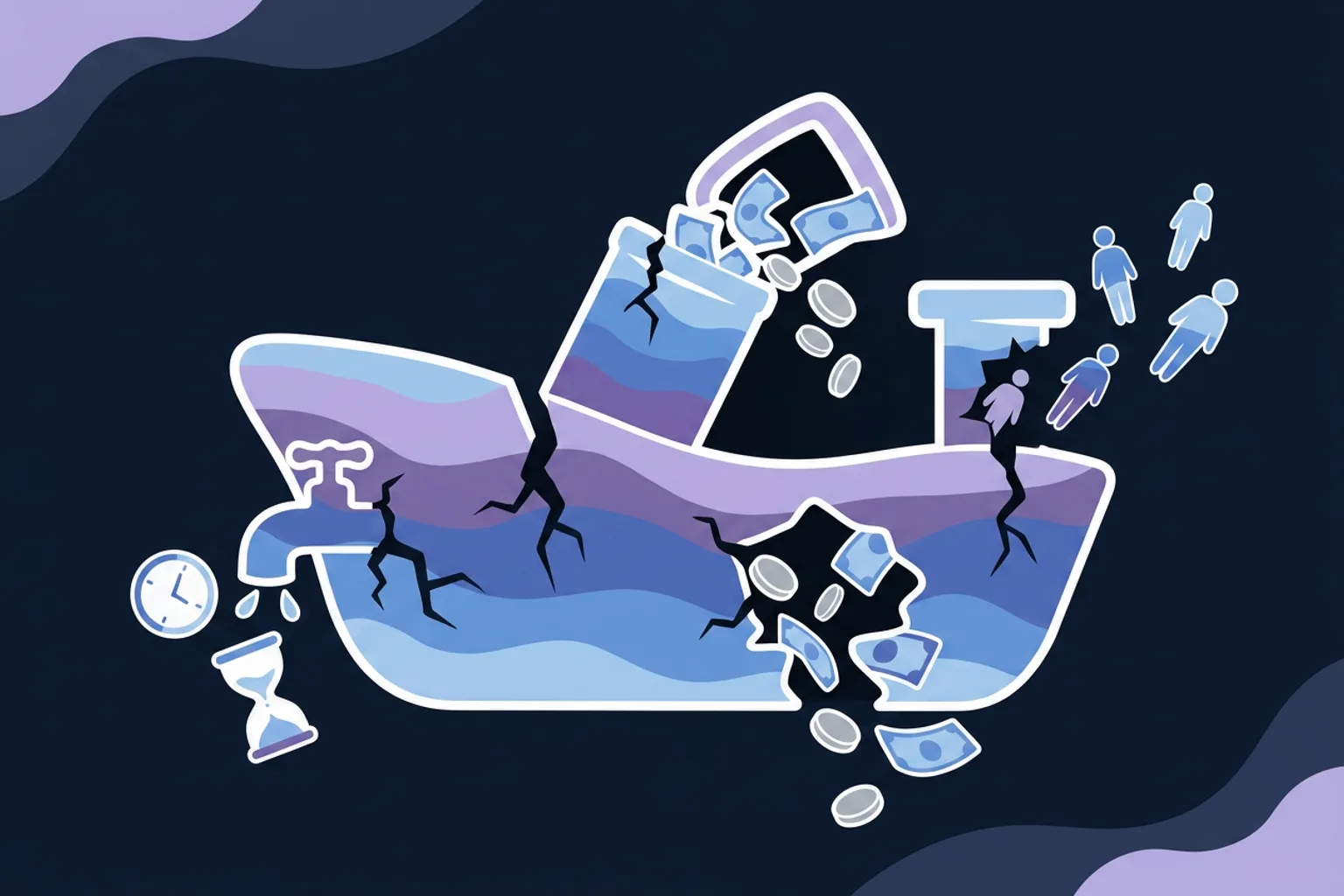
Here’s the same bucket as a picture — the funnel, and exactly where each of the five leaks springs:
If your follow-up leaks, more ad spend is lighting money on fire. Every dollar of traffic flows into the same holes. Fix the bucket first; then turn up the tap. The order is not optional.
A 5-minute audit of your own funnel
- Submit your own contact form / send yourself an inquiry. Time how long until a real response. (Most owners are horrified.)
- Look at your last 10 leads that didn’t buy. How many touches did each actually get? Count them.
- Find your last 10 customers. How many got a review or referral ask? Be honest.
- Five predictable leaks: slow response, one-and-done, no “not now” path, bad post-sale handoff, never asking.
- The exact multiple is folklore; the direction is law — the first useful response usually wins.
- Sales research keeps landing at five to eight touches to close; most owners send one.
- Fix the bucket before you turn up the tap.
Sure your follow-up is fine? Run the 5-minute audit anyway. The gap between “I follow up” and “the last 10 leads got an average of 1.2 touches” is where most of your missing revenue lives.
More learning resources
Still want another angle? These are hand-picked and vetted to line up with this lesson — from creators and sites worth your time.