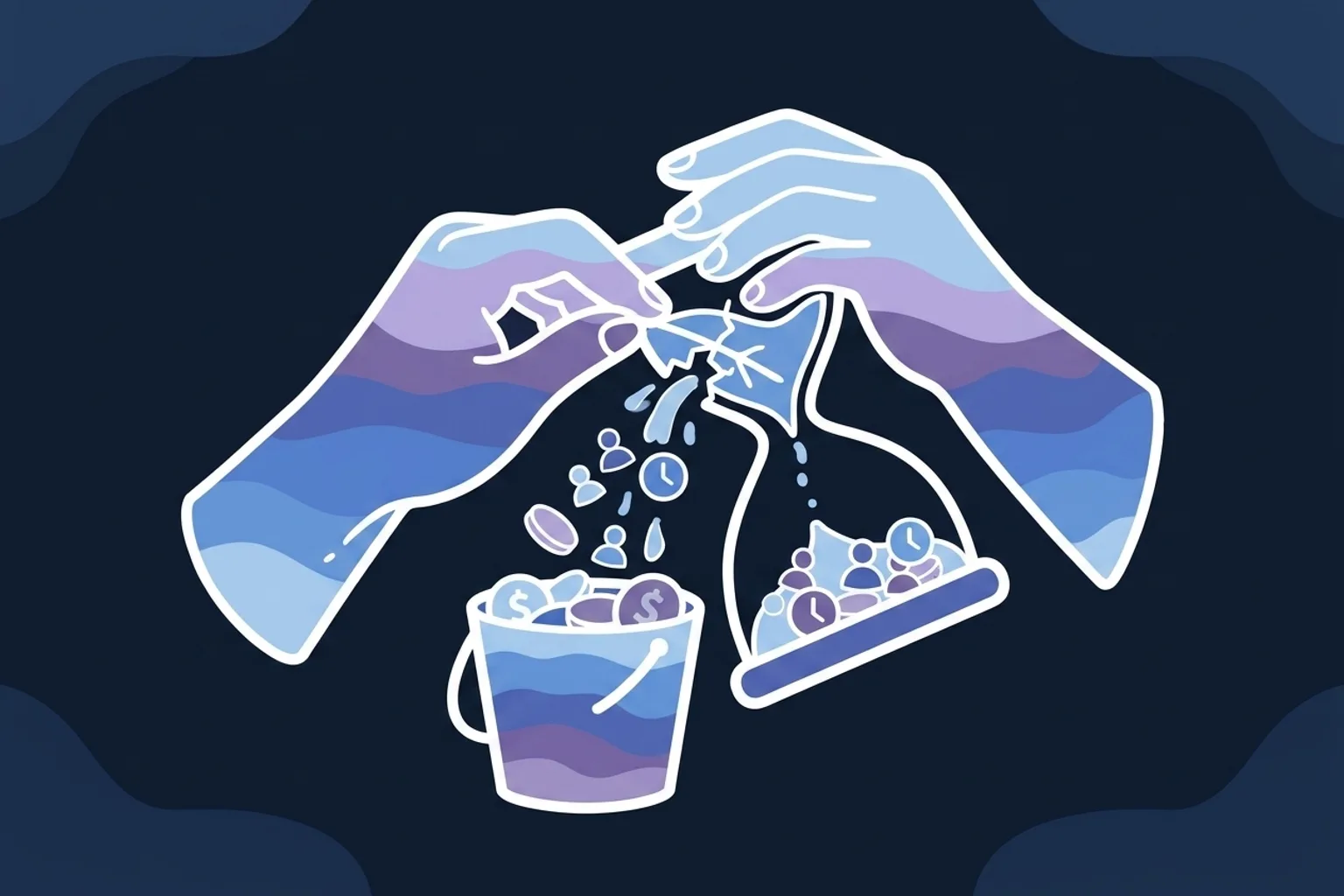
Module 5 · Build for Ownership
Own the things that matter
You can build a beautiful, automated, fast-growing business — sitting entirely on land you don’t own. Then a platform changes its rules, an agency “parts ways,” or a tool doubles its price, and you find out the hard way that you were renting your own growth. This module makes sure that’s never you.
The direct answer
Before you hire the next vendor or adopt the next tool, make sure you own four things: your domain, your customer list and data, your content and brand assets, and the accounts everything runs on. Own those, and any vendor or platform becomes replaceable — which is exactly the position of power you want to negotiate and grow from.
Why this matters more in 2026, not less
Two trends collided. First, more of your business runs through third-party platforms than ever — which is convenient until it isn’t. Vendor lock-in is when your product, service, or data is trapped inside one vendor’s walled garden; leaving means losing access, so they hold the leverage on price and policy. Second, third-party platforms are now a top source of data breaches — according to Verizon’s 2025 breach report, third-party involvement in breaches doubled in a single year, from roughly 15% to 30%. The more you hand over without owning, the more exposed you are on both fronts.
The pull quote
If you don’t own it, you’re renting it — and the landlord can raise the rent or change the locks.
The four things to own (and how to check)
Your domain
Your address — own the deed, not a sublease from the web guy. Check: log into your registrar and confirm the domain is in your name. Can’t? Fix it this week.
Your customer list & data
The only marketing channel you truly own — you don’t own your followers, the platform does. Check: keep an exportable copy, and confirm every tool lets you get your data out, not just in.
Your content & brand
Logo source files, photos, copy, site code. Check: get the originals from whoever built it and confirm in writing that they’re yours. “We’ll keep them on our system” is a leash.
The accounts
Google Business Profile, host, socials, ad accounts, analytics. Check: you’re owner/admin on every one, and vendors get access — never ownership. Never the reverse.
Here’s a brutal but clarifying question to ask of any vendor relationship: “If we parted ways tomorrow, what would I walk away with — and what would I lose?” If the honest answer is “you’d lose your website, your domain, your data, and your rankings,” you don’t have a vendor. You have a hostage situation with nice invoices.
- Own four things: domain, customer list/data, content/brand assets, and the accounts.
- Vendor lock-in hands pricing and policy leverage to someone who isn’t you.
- Your email list is the one channel you truly own — protect an exportable copy.
- Vendors get access to your accounts; they should never own them.
Just realized a past “web guy” owns your domain or accounts and they’ve gone quiet? Don’t panic — there’s almost always a recovery path through the registrar or platform. Start by listing exactly what’s in whose name. The next lesson gives you the checklist.
More learning resources
Still want another angle? These are hand-picked and vetted to line up with this lesson — from creators and sites worth your time.