
Module 1 · How Google's paid surfaces work
The results page, decoded
Before you place a bet, see the whole board. A Google results page for “[your service] near me” has four things on it, and only two of them are places you should ever pay to appear. This lesson walks one real results page top to bottom and names every slot — what’s paid, what’s free, how the two paid slots charge you differently, and which one a small firm that answers its phone can actually win. Get this picture solid and the big decision next lesson — Local Services Ads or Search — has something concrete underneath it instead of vibes.
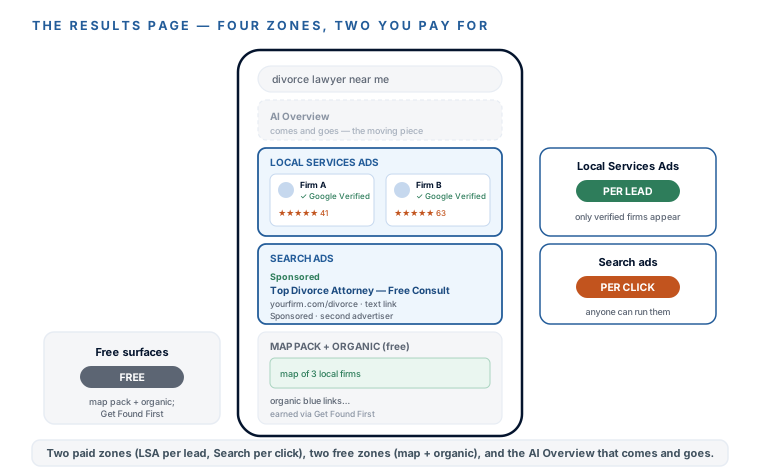
One results page, four zones
Picture a real search — “divorce lawyer near me” in a real town — and travel down the page the way a searcher’s eye does. From top to bottom, here’s what’s actually there:
- Local Services Ads — the very top. A row of cards with photos, star ratings, and a Google Verified checkmark. You pay per lead here — roughly, a phone call that lasts about 30 seconds bills you — not per click. Only verified businesses can appear, which is exactly why the badge means something.
- Search ads — just below. The text links marked “Sponsored.” You pay per click here, whether or not the person ever contacts you. Anyone with an account and a card can run them.
- The map pack and the organic results — the free surfaces. The map with three local listings, then the ordinary blue links. Nobody pays Google directly for these; they’re earned through your Google Business Profile, reviews, and local SEO — which is Get Found First’s whole territory. One sentence, credit given, moving on.
- The AI Overview — when it shows up. The AI-generated summary that sometimes sits at the very top. It’s the moving piece of the page right now, it changes constantly, and it isn’t this course’s game — noted honestly so you’re not surprised to see it.
Local Services Ads — the top
Cards with ratings and a Google Verified check. You pay per lead. Only verified businesses appear.
Search ads — just below
The text links marked “Sponsored.” You pay per click, contact or not. Anyone with an account can run them.
Map pack & organic — free
Earned, not bought — through your Business Profile, reviews, and local SEO. Get Found First's territory.
AI Overview — when it shows
The AI summary that sometimes sits on top. The moving piece of the page, and not this course's game.
The two paid slots charge you for opposite things
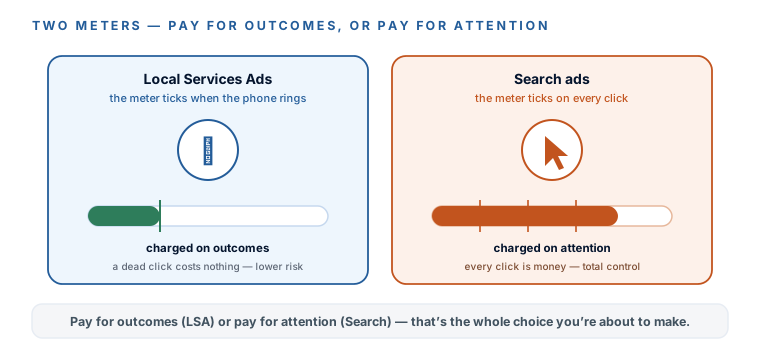
This is the difference that decides everything downstream, so it’s worth stating plainly. The two paid surfaces don’t just look different — they bill on opposite events, and they hand you opposite amounts of control.
- Local Services Ads pay for outcomes. You’re charged when a real person actually contacts you — a call, a message. Less control (you don’t write ad copy or pick keywords), but lower risk: a click that goes nowhere costs you nothing. And rank here is driven more by your reviews and responsiveness than by your budget.
- Search ads pay for attention. You’re charged the moment someone clicks, whether they call, fill a form, or bounce in two seconds. Total control — your keywords, your ad text, the exact page you send them to — but every click is money whether or not it turns into anything. Rank here is your bid multiplied by how relevant Google thinks you are.
Local Services Ads — pay for outcomes
- Charged only when a real person contacts you
- A dead click costs nothing — lower risk
- Less control: no ad copy, no keywords
- Rank driven by reviews and responsiveness
Search ads — pay for attention
- Charged the moment someone clicks
- Every click is money, contact or not — higher risk
- Total control: keywords, ad text, landing page
- Rank = your bid × how relevant Google thinks you are
Kill the myth: the top spot doesn’t go to the biggest spender
The most expensive misconception in local ads is that whoever throws the most money at Google wins the top of the page. On Local Services Ads especially, that’s just not how it works — LSA rank is an auction you can’t simply buy. Google names the factors that decide it, and money is only one of them:
- Your bid — yes, it matters, but it’s one input among several.
- Your responsiveness — Google states plainly that missed calls may hurt your rank. Answer the phone or sink.
- Your relevance to what was searched, and the search context (time, location).
- Your profile quality — and Google lists what that means: your rating, your number of reviews, your average response time, your use of good photos, and the verification checks you’ve completed.
Read that list again, because it’s genuinely good news for a small firm. A solo practice that answers every call and has 40 real reviews will out-rank a big firm that lets calls go to voicemail — no matter how much the big firm bids. Reviews and responsiveness are the levers, which is exactly why Get Found First (the review engine) and Never Lose Another Lead (the answering) feed directly into your ad rank. They’re not separate projects; they’re part of this one.
Don’t hear “per lead is safer” as “per lead is always cheaper.” A legal LSA lead can run $50–$300 (dated 2026-07; ranges, not promises — check your own account). The safety is in what you’re paying for: with LSA a dead click costs nothing, and with Search it costs a full click. That’s the risk difference, and it’s why the decision next lesson usually starts with LSA on a small budget.
You can now look at any local results page and name every slot: Local Services Ads at the top (per lead, Google Verified, only verified businesses), Search ads just below (per click, marked Sponsored, open to anyone), the free map pack and organic results below that (Get Found First’s territory), and the AI Overview that comes and goes. You understand the difference that decides everything: LSA charges on outcomes and hands you less control but lower risk; Search charges on attention and hands you total control but bills every click. And you’ve killed the biggest myth — the top spot isn’t bought, it’s earned through bid, responsiveness, relevance, and profile quality, which is why a small firm that answers its phone beats a big spender that doesn’t. Next: the decision rule that turns this picture into a firm answer for your firm — LSA, Search, or both.