
Module 6 · Know what's working: tracking and the 15-minute read
The 15-minute weekly routine
Here is the promise this whole session has been building toward: a well-built ad account does not need your evenings. It needs the same fifteen minutes, once a week, forever. Not fifteen minutes of anxious fiddling — fifteen structured minutes that read the numbers, block the junk, rate the leads, and make at most one deliberate change. This lesson blocks that quarter-hour to the minute, hands you the checklist that runs it, and gives you an AI read-out prompt that turns your week’s numbers into a plain-English verdict and a single recommended move. Calendar it, and the account becomes something you run, not something that runs you.
The fifteen minutes, blocked to the minute
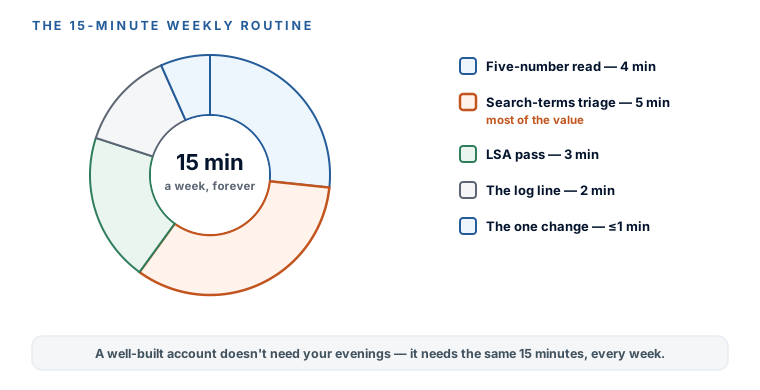
Every block has a job, and the sizes are deliberate — the middle one is where most of the value lives, which is exactly why beginners skip it and pour the time into fiddling instead.
- The five-number read — 4 minutes. Open your saved columns from the last lesson. This week against the last four. Give each number a quick green, yellow, or red — trend, not snapshot. You’re taking the account’s temperature, not diagnosing surgery.
- Search-terms triage — 5 minutes. The m4 workflow: open the Search Terms report, block the junk, promote the winners. This is where the real money is made or lost every week — the actual searches that triggered your ads, with the junk ones quietly billing you until you say no. Most of the fifteen minutes’ value is right here.
- The LSA pass — 3 minutes (if you’re running Local Services Ads). Rate every unrated lead — the only credit lever you have left. Glance at your response time and at the review count of the competitor sitting above you. (Out-reviewing them is a rank move; that’s Get Found First’s job, credited and moving on.)
- The log line — 2 minutes. Write one line in your worksheet: spend, leads, cost per lead, and one observation. This feels trivial and it isn’t — next module you make scale-or-kill decisions from this log, not from memory, and memory is a liar about six weeks of ad data.
- The one change — a minute or less. The routine allows at most one change a week. A batch of negatives counts as one. A bid nudge counts as one. That’s the whole discipline, and the next section explains why it’s the most important rule in the lesson.
- 4m
The five-number read
Open your saved columns. This week against the last four — a quick green, yellow, or red on each. Temperature, not surgery. - 5m
Search-terms triage
The m4 workflow: block the junk, promote the winners. Most of the fifteen minutes’ value lives right here. - 3m
The LSA pass
If you run Local Services Ads: rate every unrated lead, glance at response time and the review count of the firm above you. - 2m
The log line
One line: spend, leads, cost per lead, one observation. Next module you make scale-or-kill calls from this, not memory. - ≤1m
The one change
At most one change a week — a batch of negatives, a bid nudge. That’s the whole discipline.
Why one change a week — the discipline that makes data mean something
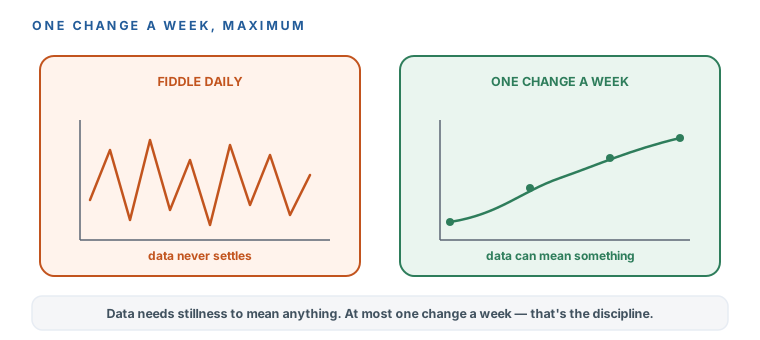
This is the rule that separates people whose accounts improve from people whose accounts thrash. The beginner death-spiral looks like diligence: log in daily, see a scary number, change a bid, change a keyword, add a negative, adjust the budget — every day a new tweak. The problem is that data needs stillness to mean anything. Change five things and something improves, you have no idea which one did it, and you’ve reset the clock on the learning period yet again. Change one thing a week and wait, and the account actually tells you what worked. Fiddling feels like progress and produces noise. One change a week feels like patience and produces a machine that gets better.
Let AI read the week for you
The read itself — turning five numbers and a log into a verdict — is exactly the kind of thing AI does well and you don’t have to. Paste your week’s numbers and your recent log into the prompt below and it returns a plain-English state of the account and the single highest-value change to make this week. You stay the decider; it just does the analysis. This is the same pattern the whole course leans on and that Automate Your Business with AI generalizes: AI as the analyst, you as the one who decides and owns the call.
Copy this prompt — the weekly read-out
Read my Google Ads week like a calm, waste-averse ads manager. I get 15 minutes a week and
ONE change.
- My business: [WHAT YOU DO] in [TOWN]. Campaign advertises: [SERVICE].
- My targets (from my plan): ~[N] leads/month at ~$[CPL] per lead. Budget $[AMOUNT]/month.
- This week's numbers: impressions [N], clicks [N], CTR [N]%, avg CPC $[N],
  conversions [N], cost per conversion $[N].
- The previous 4 weeks, roughly: [PASTE or summarize]
- Anything I noticed (search terms, lead quality, a competitor): [NOTES]

1. Give me a one-paragraph plain-English state of the account: healthy, wobbling, or leaking —
   and the trend, not just this week.
2. Name the ONE change with the best value-for-effort this week (or say "change nothing —
   let it run," which is a real answer).
3. Tell me the one thing to watch next week.
No jargon, no list of ten optimizations. One change maximum.
The routine only works if it actually happens, so treat it like a client meeting you can’t skip: same day, same time, every week, phone on do-not-disturb, fifteen minutes. Put it on the calendar as a recurring block. An account checked religiously for fifteen minutes beats an account checked frantically for an hour whenever panic strikes — every single time.
The whole operating job now fits in a fifteen-minute weekly block you’ve put on the calendar. You know the five sub-blocks and their minutes — the five-number read (4), search-terms triage (5, where the value lives), the LSA pass (3), the log line (2), and one change (a minute or less) — and you know why the one-change-a-week rule is the discipline that lets data mean anything at all. You’ve got the read-out prompt that turns your week into a plain-English verdict and a single recommended move, and the Weekly Dashboard Checklist in hand. From here the account largely runs itself on those fifteen minutes. Next module: the monthly pass — the scale, fix, and kill rules that turn your weekly log into real decisions, plus an honest look at every upsell Google will throw at you.
See how this looks in your business.
The free Growth Audit reads your website, message, and follow-up, then sends back a prioritized fix list — no call required.