
Module 4 · Stop the waste: negatives, location, schedule
Presence, radius, and the schedule that answers
Two settings decide who sees your ad and when — and Google’s defaults get both wrong for a local firm. The first, the location setting, is the number-one silent money-waster in all of local Google Ads: a default that quietly shows your ad to people who don’t live anywhere near you. The second, the ad schedule, decides whether your clicks arrive while a human can answer the phone or ring into voicemail at midnight. Both are two-minute fixes. Both protect real money.
The trap: “Presence or interest”
When you set locations, Google’s default — the one it labels “recommended” — is “Presence or interest”: reach people who are in your area, and anyone anywhere who’s shown interest in it. For a hotel chasing tourists, fine. For a divorce lawyer in Boise, it’s a leak: you pay $10 a click for someone in another state who read a Boise news article once, and who will never, ever hire you. That’s the trap — another default built for Google’s revenue, not your results.
“Presence or interest” (the default)
- Reaches people in your area AND anyone who showed “interest”
- You pay for out-of-state searchers who'll never hire you
- Google labels it “recommended” — for its revenue
“Presence” (the fix)
- People actually in or regularly in your area
- Fewer, realer, local impressions
- Google warns impressions will drop — that's the point
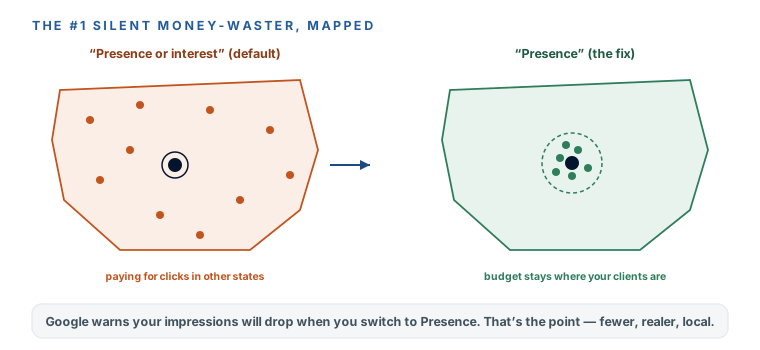
The fix takes about thirty seconds:
- Open your campaign Settings → Locations → expand Location options (it’s collapsed by default — another hint about who the default is for).
- Under “Target,” switch from “Presence or interest” to “Presence: people in or regularly in your targeted locations.”
- Google will warn you that impressions may drop. Good. Fewer, realer, local impressions is exactly the trade you want — you’re buying clicks from people who can actually become clients.
Two related settings while you’re in there. Your exclusions already default to presence-only (they block only people physically in an excluded area — leave that as is). And if your clients commute to you, consider radius targeting — a 20-mile circle around your office can beat a list of county names for a firm whose real service area is “however far people will drive.” Then put a note in your calendar: after about two weeks of spend, open the Locations (geographic) report and exclude any stray towns that are eating budget without sending clients.
The second fix: run ads only when someone answers the phone
This is the Local Services Ads responsiveness lesson applied to Search. An after-hours click that rings into voicemail is a full-price click with a near-zero chance of becoming a client — you paid for the ring and nobody picked up. So set an ad schedule that matches the hours your intake genuinely covers: Settings → Ad schedule → add your business hours plus whatever evenings or weekends a real person actually answers.
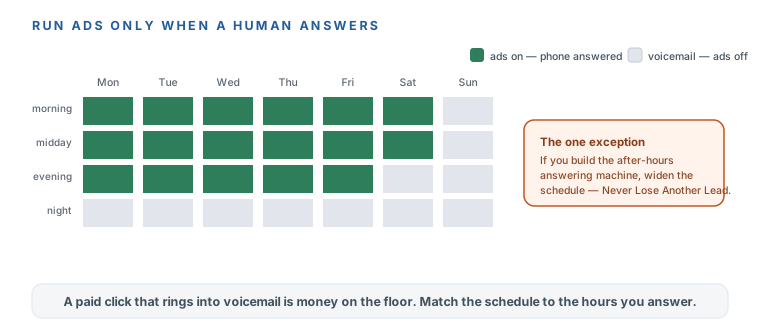
This is the whole reason the schedule matters, and it’s the loudest theme of this course: the ad buys the ring, not the client. Around 35% of law-firm calls go unanswered (the “Silent Lines” study by Law Leaders — real methodology, but vendor-run, so treat it as a vendor finding), and a five-minute response makes you about 21× more likely to qualify the lead (MIT / InsideSales.com Lead Response study, 2007 — not HBR). Every dollar you’re protecting with these settings is wasted or multiplied by what happens when the phone rings. If you genuinely can answer after hours — or you build the auto-response machine that Never Lose Another Lead teaches — then widen the schedule and capture that demand. If you can’t, don’t pay for rings nobody will answer. That’s a real decision with your name on it, not a default.
You’ve disarmed the number-one silent money-waster: your location target is set to “Presence” — people actually in or regularly in your area — not the leaky “Presence or interest” default, and you accepted the drop in impressions as the point, not a problem. You know to consider radius targeting for a commute-based service area and to check the geographic report after two weeks. And you’ve set an ad schedule that runs your ads only when someone can answer the phone — because the click only buys the ring, and an unanswered ring is money on the floor (unless you’ve built the after-hours machine, in which case widen away). Your campaign’s waste-proofing armor is on. Next module: the ads and the landing page that turn the click you fought to protect into an actual conversation.
Watch this step
This one nails the trap the lesson fixes — the "Presence or interest" location default — and shows the exact switch to "Presence: people in or regularly in" your area, in the current UI. Yes, Google warns your impressions will drop. That's the point. It’s from an independent creator — credited below, so go give them a follow.
Most Google Ads Location Targeting is Wrong (Here's The Fix)
More learning resources
Still want another angle? These are hand-picked and vetted to line up with this lesson — from creators and sites worth your time.