
Module 7 · Keep it running, scale it, or hand it off
The monthly pass: scale rules, kill rules
The weekly routine is hygiene — it keeps the account clean. But decisions live at the monthly level, where you’ve got four weeks of log lines and enough data to mean something. Once a month, for about half an hour, you make one of three calls: scale it, fix it, or kill it. The point of this lesson is to put actual numbers on those three verdicts, so the decision is arithmetic rather than mood. An account run on vibes gets scaled when you’re feeling optimistic and killed when you’re feeling broke; an account run on rules gets the decision it actually earned.
The verdict against the plan
Start by pulling your four weekly log lines and setting them next to the m1 One-Page Ad Plan. Compare your cost per lead and your lead count to what you said you’d accept. Then apply the three rules — and they’re rules, with thresholds, not gut feelings.
- The scale rule. Cost per lead at or under target for four consecutive weeks, and those leads are actually turning into consults → raise the budget 20–25%, once, then hold four weeks. Never double it. Modern Smart-Bidding-era accounts re-enter a learning period when you jump the budget hard, and you spend a week paying for the disruption. Small, single, held — that’s how you scale without breaking what’s working.
- The fix rule. Cost per lead running 1.5 to 2× your target → don’t add money to a leak. Find it with the m6 diagnosis pairs — ad, page, tracking, keywords, negatives, geo, or schedule — and give it two more weeks of fixes before you re-run the verdict. Pouring budget on a leaking account just makes a bigger puddle.
- The kill rule. Sixty-plus days in, tracking verified as actually working, and cost per lead sitting at 3× target or worse — or leads that simply never become consults — → pause the campaign, or the losing ad group. Kill the limb before the body: if one ad group is dragging the account, pause that, not everything. Then re-run the m1 decision with real data. Maybe your vertical and geography are a “Search doesn’t pencil” case and LSA-only is the honest answer. Maybe — and read this twice — the leak was never the ads at all.
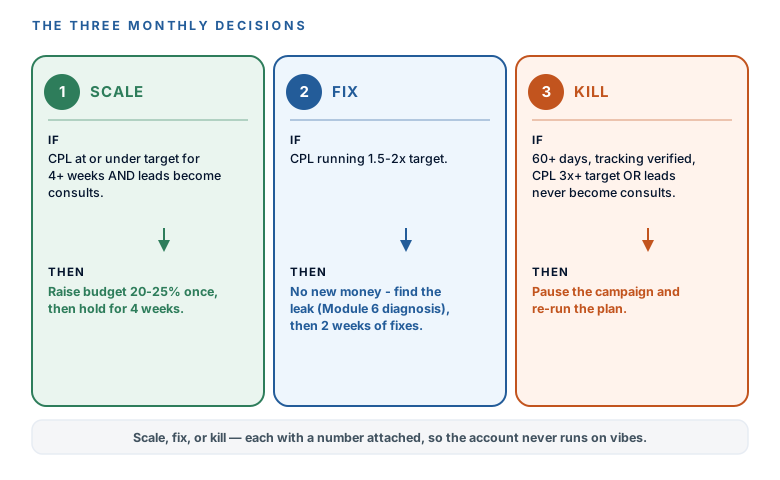
Scale
CPL at or under target for 4 consecutive weeks AND leads become consults → raise budget 20–25% once, then hold four weeks. Never double it.
Fix
CPL running 1.5–2× target → don't add money to a leak. Find it with the m6 diagnosis pairs, give it two more weeks, re-run the verdict.
Kill
60+ days, tracking verified, CPL at 3× target or worse (or leads never convert) → pause the campaign or the losing ad group, re-run the m1 plan.
When you hit the kill rule because the leads never turned into consults, pause before you blame the ads. Leads that arrive and evaporate are far more often an intake failure than an ad failure — a phone that rang out, a form that sat unanswered for a day, a caller who’d already booked the next firm on the list by the time you called back. That’s the mirror of the whole course: the ad only ever bought the ring. If the ring isn’t getting answered fast, no amount of ad tuning fixes it — that’s Never Lose Another Lead, and it’s where you should look before you kill a campaign that was doing its job.
Cost per lead is a means, not the goal
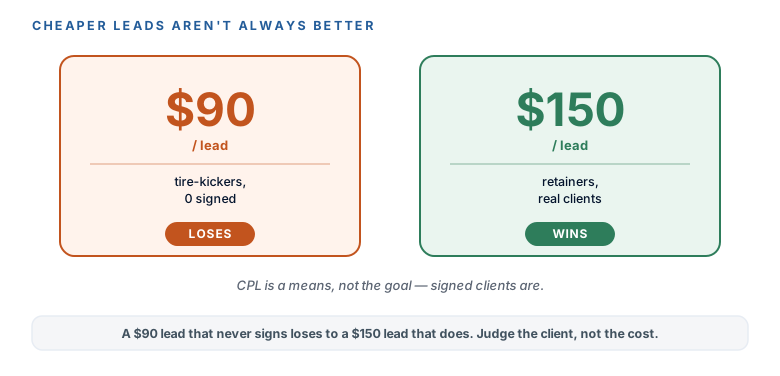
Here’s the trap that catches sophisticated owners: optimizing cost per lead until you forget what it’s for. A $90 cost-per-lead that produces tire-kickers who never sign loses, badly, to a $150 cost-per-lead that produces retainer clients. Signed clients pay your mortgage; cheap leads that don’t sign just make a tidy-looking dashboard. So every month, cross-check the log against what actually happened downstream — consults booked, clients signed, the junk. If your cheapest leads are your worst leads, the “expensive” campaign is the one to feed. Judge the client, never just the cost.
The monthly hygiene sweep
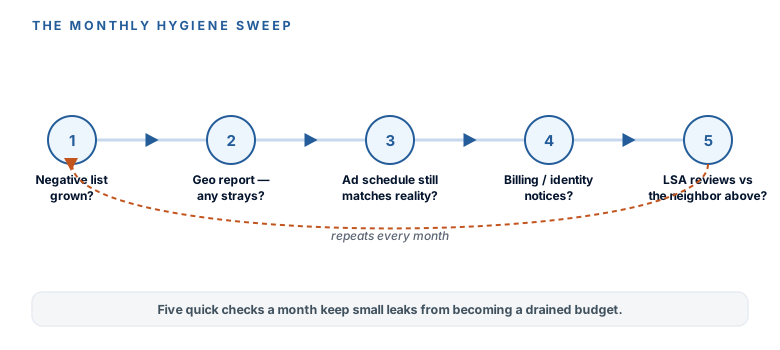
After the verdict, run a five-item circuit that catches the slow leaks a weekly glance misses. None of it takes long; skipping it for six months is how a clean account quietly rots.
- Has your negative list grown this month, or has search-terms triage gone stale?
- Any stray geography in the Locations report to exclude?
- Does your ad schedule still match reality — the hours someone actually answers?
- Any billing or identity-verification notices sitting unread and threatening to pause you?
- If you run LSA: how’s your review count against the neighbor above you in the ranking?
Let AI apply your own rules
The verdict is a place AI genuinely helps, because it applies your rules without your optimism. Paste your log lines and what actually happened with the leads, hand it the scale/fix/kill thresholds, and make it show the arithmetic. You still own the call — but you own it with the emotion taken out.
Copy this prompt — the monthly verdict
Give me the monthly verdict on my Google Ads. Use my rules, not optimism.
- My plan targets: ~[N] leads/month at ~$[CPL]. Budget $[AMOUNT]/month. Live since [DATE].
- The last 4 weekly log lines (spend, leads, CPL, note):
[PASTE]
- What actually happened with the leads (consults booked, clients signed, junk):
[NOTES]
- My rules: scale = CPL at/under target 4+ weeks AND leads become consults → +20–25% once.
  Fix = CPL 1.5–2× target → find the leak, no new money. Kill = 60+ days, tracking verified,
  CPL 3×+ target or leads never become consults → pause and rethink.

1. Apply my rules and give me the verdict: SCALE, FIX, KILL, or HOLD — with the arithmetic.
2. If FIX: the single most likely leak (ad, page, keywords, geo, schedule, tracking, or my
   answering speed) and how to confirm it in 10 minutes.
3. If the leads-to-consults ratio is the weak link, say plainly whether my problem is ads or
   intake.
Be blunt. "Change nothing" is an acceptable verdict.
This pass lives on the back page of your Weekly Dashboard Checklist — the scale/fix/kill rules and this verdict prompt, so the monthly decision has a home right next to the weekly routine.
You’ve got explicit, numeric rules for the three monthly decisions, so the account never runs on mood. Scale: cost per lead at or under target four-plus weeks and leads becoming consults → +20–25% once, then hold. Fix: 1.5–2× target → find the leak, no new money. Kill: 60+ days, tracking verified, 3×+ target or leads that never convert → pause and re-run the plan. You know cost per lead is a means and signed clients are the goal, you’ve got the five-item hygiene sweep, and you’ve got the verdict prompt that applies your rules without your optimism. You also know the honest mirror: leads that never become consults are usually an answering problem, not an ads problem. Next: an honest sorting of every upsell Google will push at you — PMax, broad match, and the fraud tools you don’t need.