
Module 2 · Local Services Ads: pay per lead, not per click
Work the leads: answer fast, rate every one
Everything up to now — the badge, the profile, the budget — just gets your phone to ring. Local Services Ads are won or lost after that. Two habits decide whether the money pays: answer every call, fast; and rate every lead, good and bad. The first protects your rank and your revenue at the same time. The second is the only lever you have left over what you get charged — and it works differently than the old advice you’ll find online. Let me tell you what changed, and exactly what to do.
Habit one: answer fast, every single time
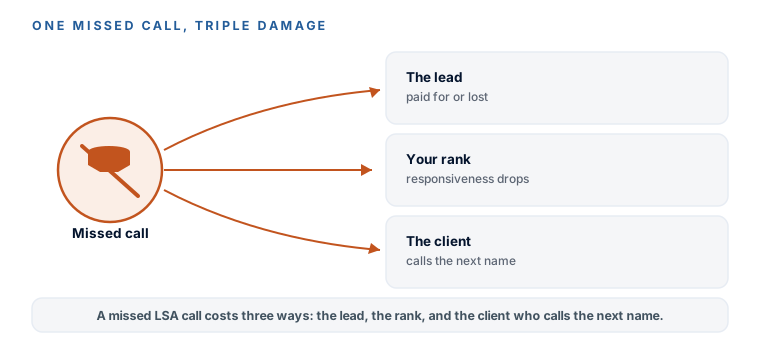
Google’s own list of LSA ranking factors includes your responsiveness — it says in plain language that missed calls may negatively affect your rank — along with your average response time. Sit with what that means. A missed LSA call is triple damage: you lose a lead you may already be paying for, your rank takes a hit that makes the next leads harder to get, and the person who called simply dials the next name on the list and becomes someone else’s client. One missed call, three separate wounds.
The lead
You lose a lead you may already be paying for — gone the moment it rang out.
Your rank
Responsiveness is a Google-stated factor; missed calls may hurt rank, making the next leads harder to get.
The client
The caller simply dials the next name on the list and becomes someone else's client.
This is the loudest moment in the whole course for the thing I keep saying: an ad only buys the ring; something has to answer it. The research is blunt. Somewhere around 35% of law-firm calls go unanswered (that’s the “Silent Lines” study from Law Leaders — a real four-week study of 1,200 calls, but run by a vendor, so I’ll cite it as exactly that). And a five-minute response makes you about 21 times more likely to qualify the lead than waiting longer (that’s the MIT / InsideSales lead-response study from 2007, the one everyone mis-attributes to Harvard Business Review — it wasn’t). You do not need to memorize the citations. You need to internalize the shape: the money you spend here is either wasted or multiplied by what happens in the first five minutes after the phone rings.
Building the system that actually answers — the one shared front door, the five-minute response, the auto-reply that catches the after-hours caller — is a whole course of ours: Never Lose Another Lead. It’s the intake engine these ads deserve. If you take one cross-link from this entire course, take that one, because it’s the difference between LSA paying for itself and LSA being an expensive way to send prospects to your competitors.
Habit two: rate every lead — the honest history
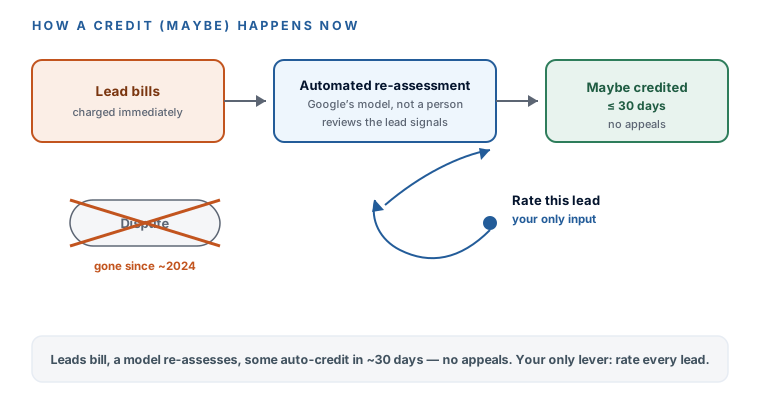
You’ll read a lot of old advice about “disputing” bad LSA leads. Here’s what actually happens now, in two sentences. The old flow — flag a junk lead, get a credit within 48 hours — is gone (retired around 2024). It was replaced by an automated system: obviously invalid leads simply aren’t charged; charged leads get re-assessed by Google’s model and may be auto-credited if judged low-quality, usually within about 30 days — and you cannot appeal the decision.
Two things stopped being creditable, and they’re the reason the setup lesson made you tighten your profile: “wrong area” and “wrong job type” leads. If you get a call about a service you don’t offer or from a zip you don’t serve, that’s a bill you eat — which is exactly why you checked only true services and listed only real areas. And a few categories get no automated credits at all: healthcare, tax specialists, and advertisers in Europe. Know where you stand.
So what’s your lever? One thing: the “Rate this lead” survey. Open each lead, rate it — booked, or junk with a reason — and add a note. Every rating trains the model that decides your future credits and, over time, the quality of leads you’re sent. You can’t argue with a decision, but you can teach the system, and rating every single lead (the good ones too, not just the bad) is how you do it.
The workflow — every lead, same routine
It takes under a minute per lead once it’s a habit. The walkthrough video shows it in the current leads-manager UI (including a real credit landing in the account), and here’s the shape:
- Open the lead in the Leads section as soon as it comes in — speed is habit one, remember.
- Listen to the recording if it was a call, so you’re rating reality, not memory.
- Mark it booked, or rate it with a reason. Every lead gets a rating — a great one, a junk one, all of them. This is the model’s training data.
- Log it. A quick note on what it was, so your weekly review has something to read.
The five-minute weekly LSA check
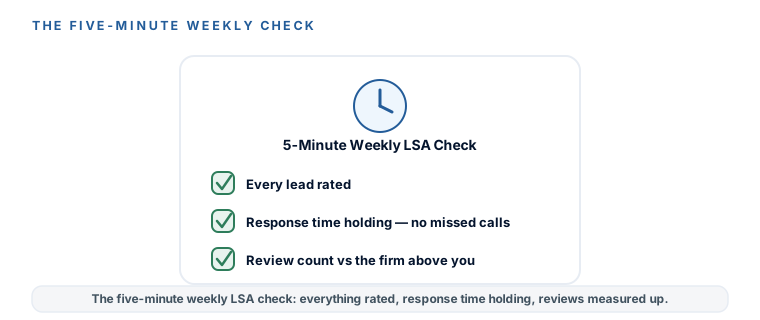
This folds into the 15-minute weekly routine a later module builds, but here’s the LSA slice so you have it now. Once a week, five minutes:
- Every lead from the week is rated — none sitting unrated.
- Your average response time is holding (and no missed calls you can prevent).
- Your review count against the competitor showing above you — out-reviewing them is a real rank move.
Because review count, rating, and response time are confirmed LSA ranking inputs, the review engine in Get Found First (its third module) literally raises your ad rank. It’s the rare piece of marketing that pays you in two currencies at once — more trust and a higher slot — which is why I keep pointing at it.
You’ve installed the two habits that make LSA actually pay. Answer fast, every time — because a missed call is triple damage (the lead, the rank, the client), and the money these ads spend is either wasted or multiplied in the first five minutes, which is the whole reason Never Lose Another Lead exists. And rate every lead — because the old dispute-for-credit flow is gone, replaced by an automated system you can’t appeal, where “wrong area” and “wrong job type” no longer earn credits, and your only lever is the “Rate this lead” survey that trains the model over time. You’ve got the per-lead workflow and the five-minute weekly check. Your pay-per-lead machine is complete. Next module: your first Search campaign — built the safe way, starting by dodging the trap Google’s signup sets for beginners.
Watch this step
A current walk through the LSA leads manager: it correctly shows the old dispute button is gone, walks the rate-to-credit flow (a real $580 credit on screen), and covers marking booked and reviewing call recordings — exactly the two habits this lesson installs. It’s from an independent creator — credited below, so go give them a follow.
Google Local Service Ads FULL Tutorial + 4 Things YOU MUST Avoid!
More learning resources
Still want another angle? These are hand-picked and vetted to line up with this lesson — from creators and sites worth your time.